

On hands
A person’s temperament often sits in the shape of their fingers far more obviously than in their expression.

People rarely think of hands as the place where the truth shows first, but I’ve always believed they reveal what the face tries to manage. A hand simply behaves as it is: tapping, fidgeting, softening, clasping, holding, hesitating. If you watch closely enough, you begin to understand that hands offer a kind of biography. Not a neat, chronological one, but a textured, tactile record of someone’s interior life.
There is so much variation in the shape of hands. Some are narrow and fine-boned, delicate, with fingers that seem to drift more than move. Others are broad and sure, built for grip, for work, for the steady tasks that anchor a day. There are hands with knuckles like small hills, hands with nails bitten down to the quick, hands that look perpetually sun-warmed, and hands that are so pale they seem lit from within. A person’s temperament often sits in the shape of their fingers far more obviously than in their expression.
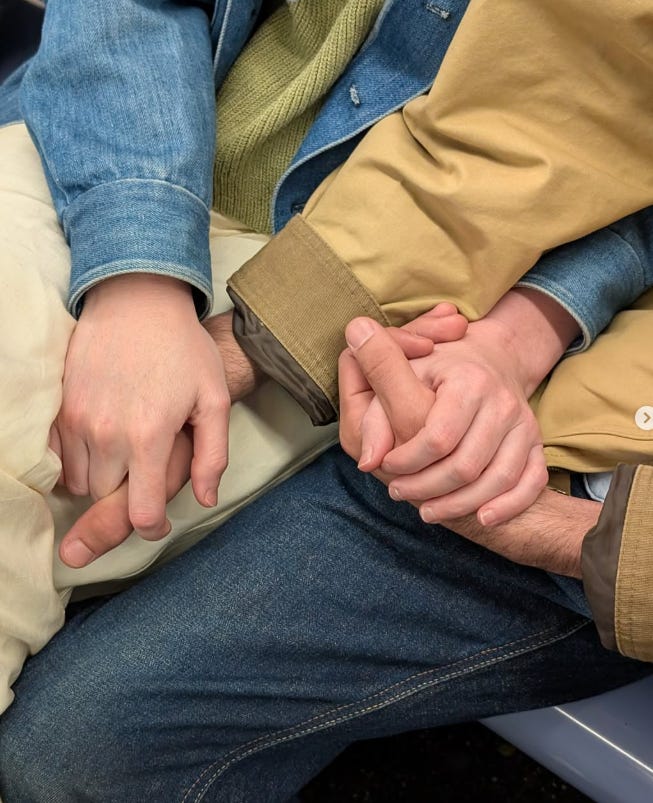
How people use their hands is its own sort of language. You can see impatience in a tapping index finger, uncertainty in the way someone picks at the edge of a sleeve, tenderness in the unconscious stroking of a thumb across the back of another hand. Confidence often appears as stillness; the ability to place a palm on a table and leave it there, without fussing or rearranging. Worry tends to show up as busyness: twisting jewellery, picking, smoothing fabric, adjusting objects that don’t really need adjusting.
Even in the smallest gestures, hands disclose thought. When someone is listening intently, their hands often soften. When they’re preoccupied, their fingers drift to familiar patterns - a hair tuck, a pen click, a quiet, repetitive press of thumb to fingertip. These micro-movements feel like the truth of a person’s present state, more honest than any sentence could be.
The way hands meet one another is a whole separate vocabulary. Holding hands is deceptively simple; it is actually full of detail. Some people interlock fingers tightly, palms sealed, as though they are stitching themselves briefly to another person. Others prefer a loose, gentle arrangement, the suggestion of connection rather than the claiming of it. There’s the tentative first intertwining, a testing of shapes, a negotiation of pressure and then there’s the kind of hand-holding that belongs to people who know each other’s palms like familiar rooms. You can tell when a pair of hands have practiced the gesture; their fit becomes almost architectural.
One of the most fascinating things about hands is how easily they reveal relationship dynamics. You can often see who is comfortable, who is seeking reassurance, who is leading, who is yielding. The way fingers curl, who initiates the touch, who loosens first: it’s all there, laid out like quiet choreography.
Artists knew this long before the rest of us started paying attention. Rembrandt, especially, treated hands as sacred ground. In many of his paintings, he delegated vast sections of the canvas to his trainees - clothing, background, even parts of the face - but he kept the hands for himself. He understood that the hands carried the soul of the sitter. They required an intimacy of observation that couldn’t be taught. Look closely at any Rembrandt portrait: the hands always feel alive. They tell you who the person was before the face does.
What makes hands so revealing, I think, is that they’re always doing something - even in stillness. A relaxed hand, one that falls softly at someone’s side or rests with quiet confidence on a knee, says more about their ease in the world than a smile ever could. A closed fist or tense finger posture gives away conflict or restraint. Hands are where the body keeps its emotional shorthand.
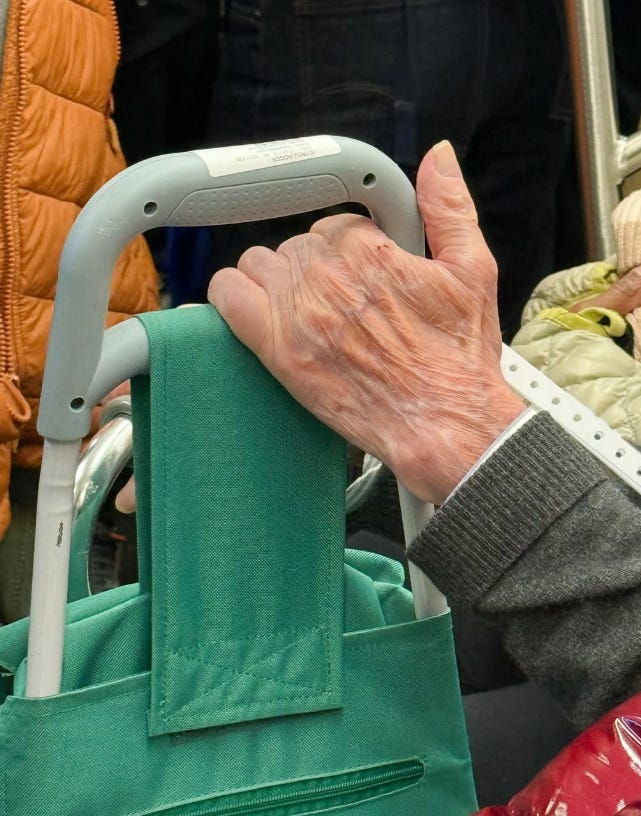
I often find myself noticing the stories etched into them. A person who works with tools has a different texture to their skin, small cuts, rougher edges, a familiarity with resistance. Someone who handles paper all day often has fine, almost invisible abrasions across the fingertips. Hands that spend time in cold weather have a certain tautness. Those who knit or sew or cook develop a kind of dexterity that you can spot instantly - their fingers move with practiced memory, like musicians who know their instrument so well they no longer need to look.
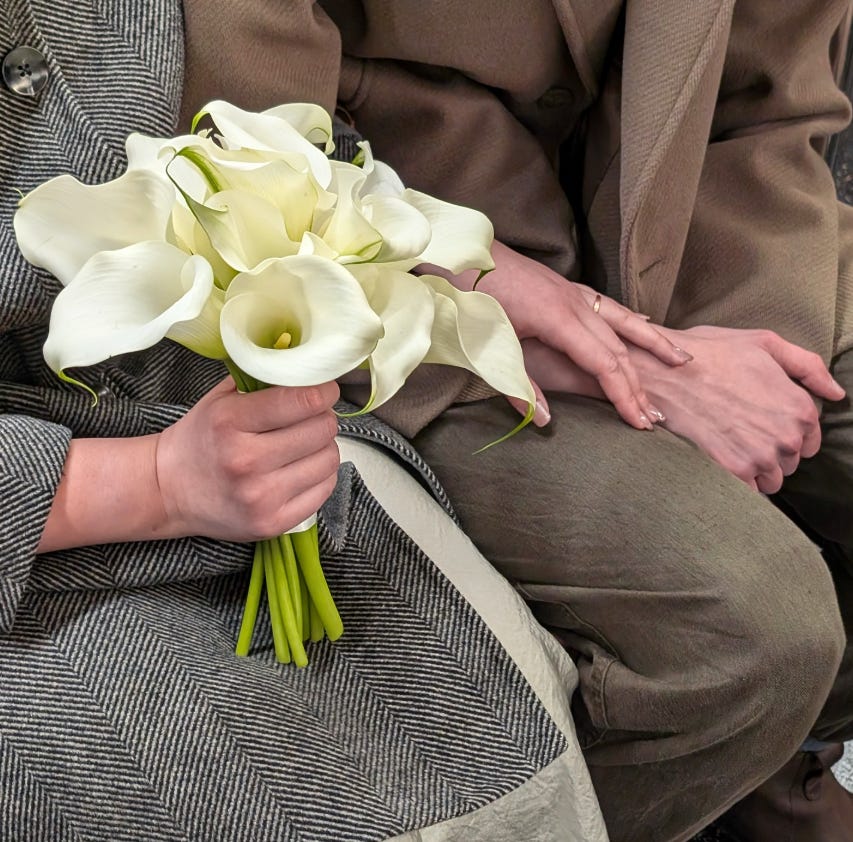
Even the way someone holds everyday objects is telling. Some cradle a cup as if it were a small warm animal; others grip it with purpose, as though a drink is simply a task in their daily sequence. The way a book is held - gently splayed, aggressively bent, carefully supported - reveals how the reader relates to the world. Phones show it too: tentative scrolling, bold thumb sweeps, the rapid staccato of typing that betrays urgency or excitement.
Sometimes I catch sight of my own hands in a window reflection or while pausing mid-task. They look familiar and strange at the same time - evidence of everything I’ve made, carried, tended, and let go of. They are my own and my ancestors. They fidget when I’m thinking, still when I’m content, softer when I’m around people I trust. They hold the imprint of my habits and my hopes.
Hands will always fascinate me because they’re the one part of us that forgets to perform. They reveal what we feel before we admit it, what we want before we name it. While the rest of us edits, adjusts, performs, our hands persist in their honesty. They reach, hesitate, create, fuss, soothe - all without self-consciousness.